Paint Care
Paint Correction in Nashville: When Your Car Actually Needs It
Swirls, haze, water spotting — how to tell the difference between paint that needs polishing and paint that just needs cleaning.
How to tell
If your paint looks dull after a proper wash, that is not dirt — it is thousands of fine scratches in the clear coat scattering light instead of reflecting it. Washing and waxing will not fix it. Machine polishing removes those defects rather than filling them, which is why the gloss comes back and stays back.
Most dullness people blame on age is really accumulated wash damage: automated brush washes, dry wiping, the wrong towels, and years of sun exposure. Understanding what is actually wrong with the paint saves you money, because half the vehicles we look at need decontamination and protection, not correction.
Cleaning vs. Correcting
Needs cleaning
A detail will fix it
- Paint feels rough but looks glossy once wet
- Road film, sap or pollen residue on the surface
- Water beads poorly — protection has simply worn off
- Gloss returns fully after washing and waxing
Needs correcting
Only polishing fixes it
- Fine circular swirls visible in direct sunlight
- Haze that flattens the color, especially on black and dark paint
- Water spots that do not wipe or wash away
- Dull even immediately after a thorough wash
The two-minute test
Wash and dry the car, then look down a panel at a low angle in bright sun. Wetting the panel with a hose temporarily hides swirls — if the gloss disappears again once it dries, the defects are in the clear coat.
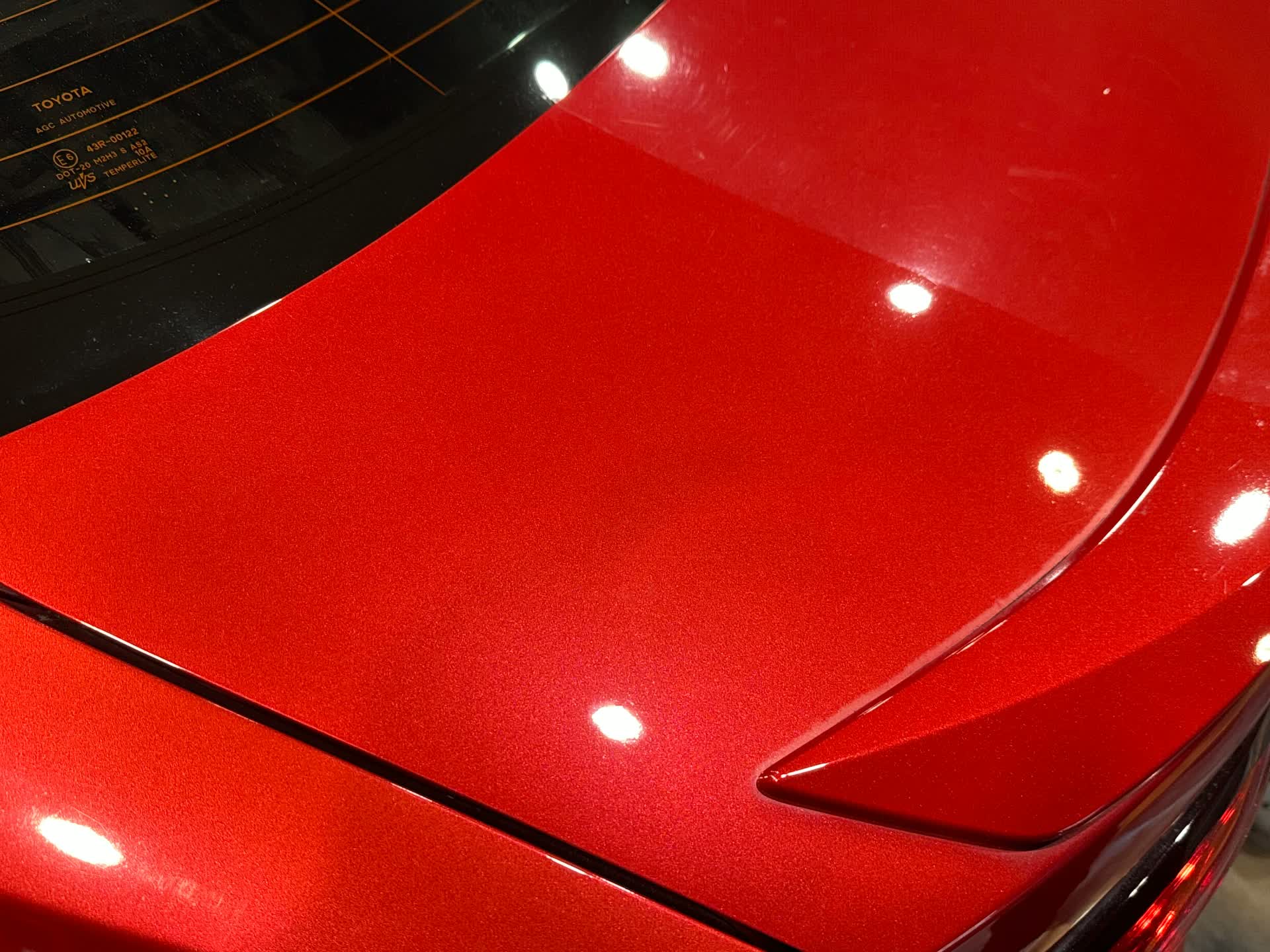
Corrected paint reflects cleanly instead of scattering light
How the Process Works
01
Wash and decontaminate
The vehicle is hand washed, then clay bar decontamination pulls out bonded fallout. Polishing over grit would only drag it across the paint.
02
Assess the finish
We look at the paint panel by panel in proper light to decide whether a single-stage enhancement is enough or a dedicated cutting stage is needed.
03
Machine polish
Defects are leveled out of the clear coat. A one-step enhancement improves gloss and reduces lighter swirling; a two-step removes a far higher percentage of imperfections.
04
Protect the result
Wax or sealant protection is included, or a ceramic coating can be applied directly afterward to lock in the corrected finish.
Correction before coating
If a coating is in your plans, do the correction first. A coating preserves whatever condition the paint is in, so polishing beforehand means you are sealing gloss rather than sealing defects. See ceramic coating in Nashville.
Dark paint that lost its depth?
Black, navy and dark grey show every swirl. Those are the finishes correction transforms most.
Which Level Do You Need?
A one-step enhancement is the right answer for a lot of vehicles — a finish that is tired rather than damaged, or a car you plan to keep clean going forward. A two-step correction makes sense on paint with years of automatic-wash damage, or when you want the finish as close to flawless as the clear coat allows before a long-term coating.
There is a limit worth stating plainly: correction removes a controlled amount of clear coat. Deep scratches you can catch a fingernail in go through the clear coat, and no amount of polishing safely removes those. We tell you that up front rather than promising a result the paint cannot give.
Keeping a corrected finish
Correction is undone by the same thing that caused the damage. Skip brush washes, use proper towels, and keep protection current. A premium wash & wax or a coating is what keeps the work from being temporary.
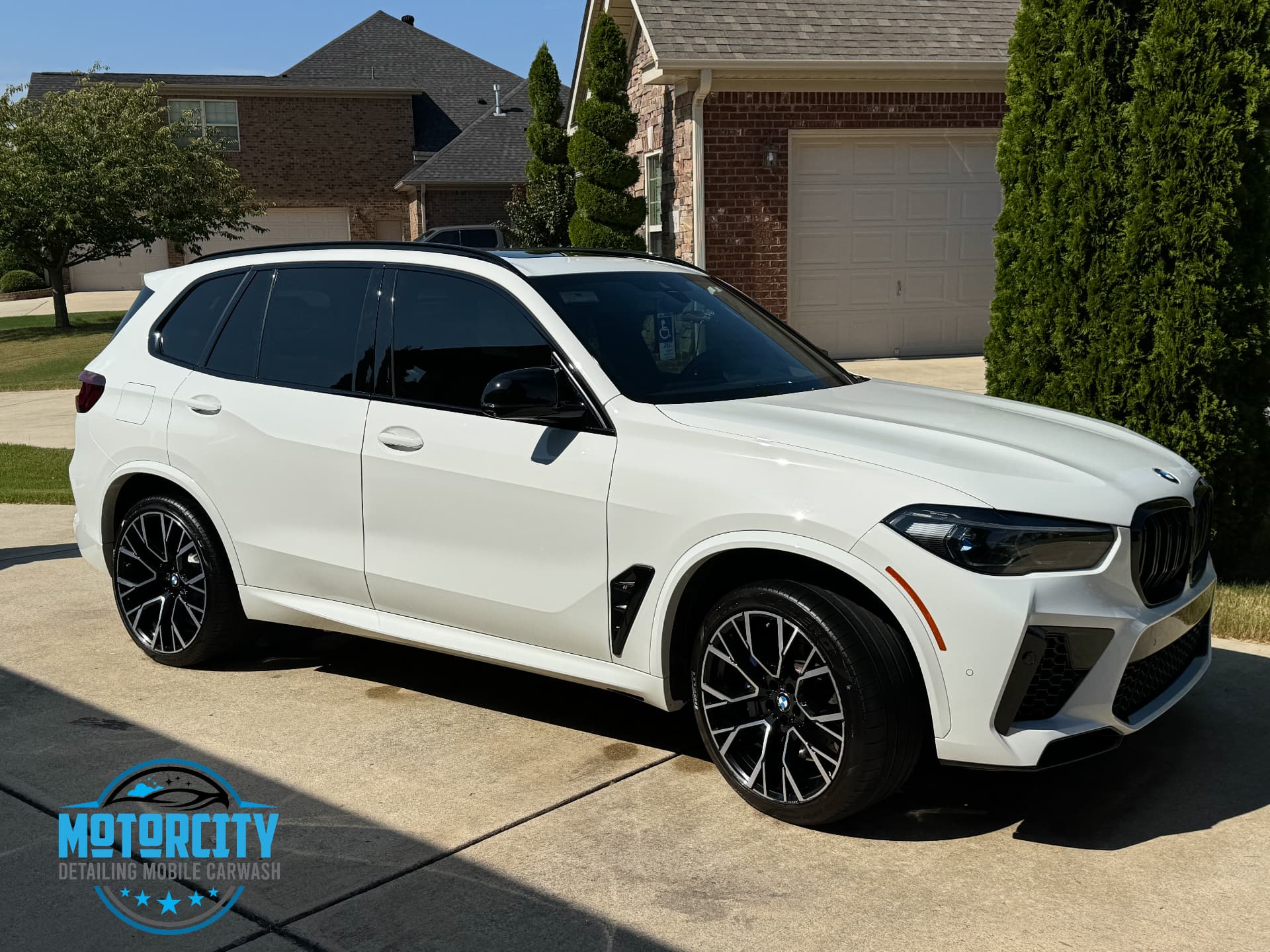
Protection afterward is what makes the result last
One thing to check first
If the clear coat is peeling or flaking, that is failure rather than defect, and polishing cannot repair it. Send photos and we'll say so honestly instead of taking the job.
Related services
Common questions
Paint Correction FAQs
How do I know if my car needs paint correction?
Wash the vehicle, dry it, then look at a panel in direct sun or under a bright light. If you see fine circular scratches, haze that dulls the color, or spotting that does not wipe away, that damage is inside the clear coat and only polishing removes it.
What is the difference between a one-step and two-step correction?
A one-step paint enhancement polishes and brightens the finish in a single stage, improving gloss and reducing lighter swirling. A two-step correction adds a dedicated cutting stage before refinement, which removes a far higher percentage of imperfections on paint that has been washed poorly for years.
Does correction include protection afterward?
Yes. Traditional wax or sealant protection is included with correction work, and a ceramic coating can be added directly afterward for longer-term protection.
Can paint correction be done at my home?
Yes. Correction is performed on location with water and power carried onboard our mobile units.
Not Sure What Your Paint Needs?
Send a few photos of the finish in daylight and we'll tell you honestly whether correction is worth it.
Starting prices vary by vehicle size, service selected and vehicle condition.