

Seasonal Care
Nashville Pollen & Your Car: How to Protect Your Paint and Interior
Pollen season is hard on paint and harder on interiors. Here is how to handle it without grinding it into your clear coat.
The short version
Pollen isn't corrosive, but it is abrasive and it holds moisture against your paint. Most pollen-season paint damage isn't caused by the pollen — it's caused by people wiping it off dry. Rinse before you touch the vehicle, keep protection on the paint so pollen has less to cling to, and clean the interior properly, because pollen gets pulled inside through the cabin air intake and settles into carpet and cloth.
Anyone who has parked under a tree in Middle Tennessee in spring knows the look: a yellow-green film over every horizontal panel, then a second coat by the next morning. It's cosmetic on day one. It becomes a paint problem when it's handled the wrong way for six weeks running.
What Pollen Actually Does
It's abrasive
Pollen grains are solid particles. Drag them across a clear coat with a dry towel and you're polishing paint with grit — which is exactly how fine swirl marks and haze accumulate. Dark-colored vehicles show the result first and worst.
It traps moisture
A pollen layer holds dew and rain against the paint instead of letting it evaporate. Add spring humidity and you get water spotting, and on vehicles with no protection, mineral deposits that need decontamination to remove.
It gets inside
The cabin air intake pulls pollen into the ventilation system, and shoes and clothing bring more in. It settles into carpet fiber, cloth seats and vent louvers, and every time the blower runs, some of it circulates again.
The one mistake to avoid
Do not wipe, dust or "just knock off" dry pollen with a towel, a duster or your hand. That single habit causes more paint damage during pollen season than the pollen ever does.
What Actually Works
01
1. Rinse, don't wipe
Flood the panels with water and let it float the pollen off before anything makes contact. Top down, no pressure needed.
02
2. Wash with clean media
Fresh water, clean mitt, and rinse the mitt often. Reusing a loaded mitt just moves grit around.
03
3. Keep protection on the paint
A sealant or coating gives pollen a slick surface with nothing to grab. Less clinging means less contact and less risk.
04
4. Clean the interior too
Vacuum carpets and cloth, clean vent louvers, and reset the surfaces where pollen has been settling for weeks.
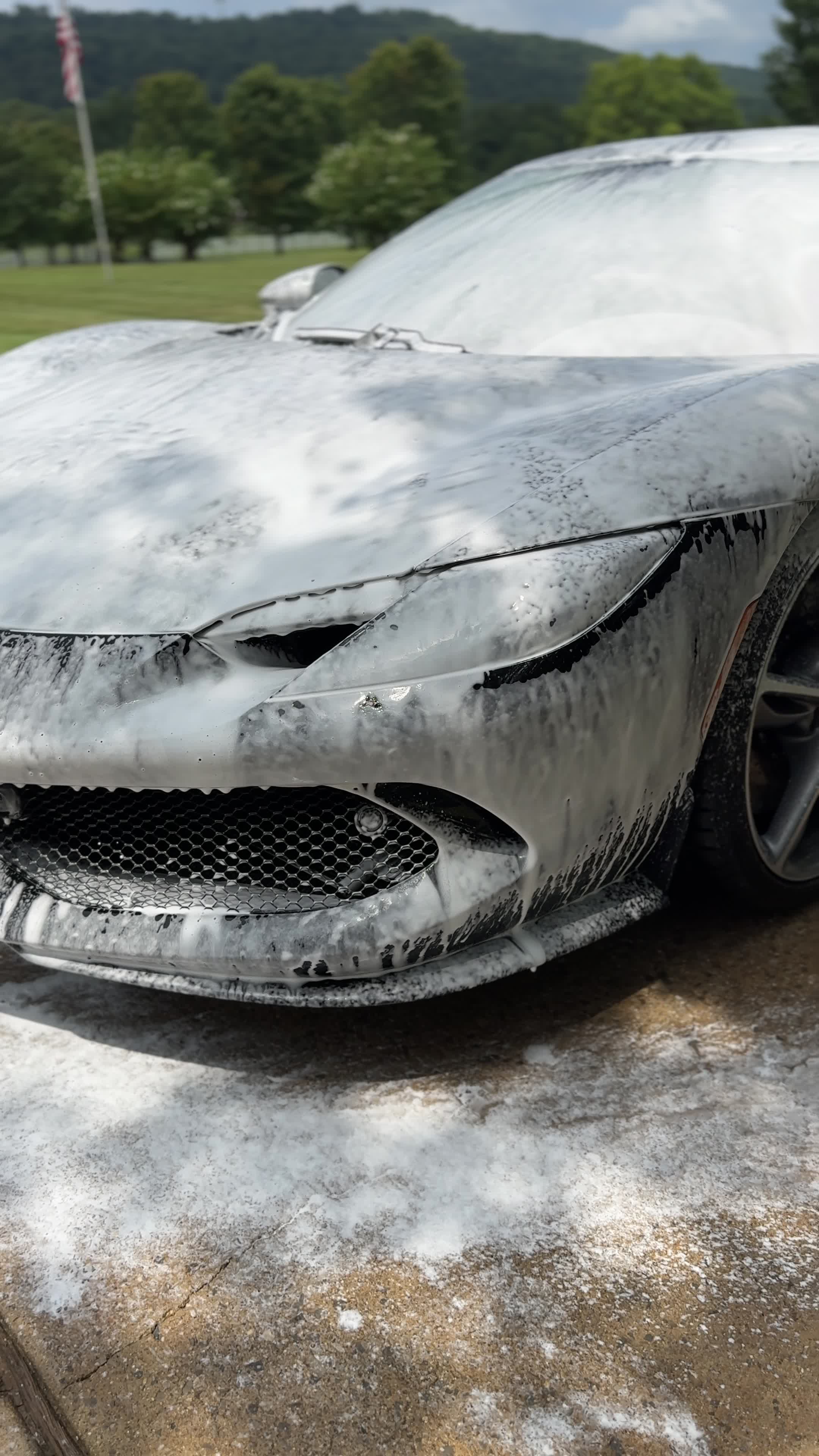
Foam and water do the lifting so the mitt doesn't have to
Why protection is the real answer
On bare clear coat, pollen sits in the microscopic texture of the paint. On a sealed or coated surface, it sits on top of a slick film and rinses away. The Motorcity Signature and Special apply a ceramic sealant rated for six to twelve months; a ceramic coating extends that considerably.
Timing matters more than effort
Protection applied before the heavy weeks makes the whole season easier. We'll come to your driveway or office.
If Pollen Season Already Got Away From You
Two things are usually true by the end of spring: the paint feels rough rather than slick, and the interior has picked up weeks of fine dust. Both are fixable in one appointment.
On the exterior, a premium wash & wax handles a vehicle that just needs the film off and protection back on. If the paint feels gritty, clay bar decontamination is the step that removes what's bonded into it — and if the finish already shows swirls and haze from a season of dry wiping, that's paint correction, which polishes the defects out rather than filling them.
Decontaminated, then sealed — pollen has nothing to hold onto
Inside, a full interior detail vacuums carpets, mats and cloth seats, cleans vents and trim, and — at the deeper level — shampoos and extracts carpets and upholstery. If the cabin smells stale every time the blower kicks on, that's usually accumulation in the carpet and vents rather than the air itself.
Check the cabin air filter
It's the cheapest pollen-season upgrade there is, and a clogged one makes the whole cabin feel worse. If yours hasn't been replaced in a year, do it before spring.
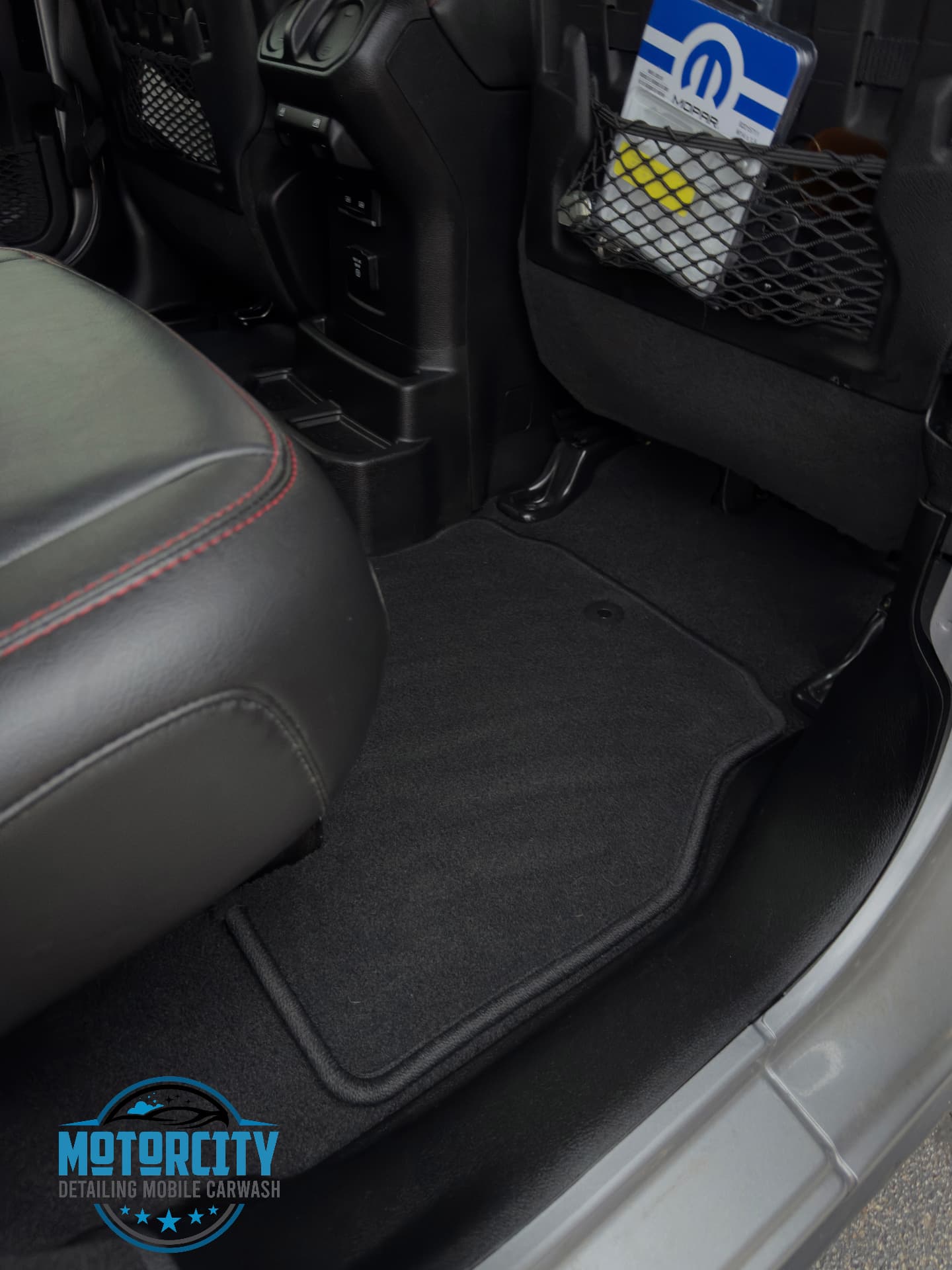
Vents, trim and carpet reset after weeks of pollen
A Simple Pollen-Season Plan
Get protection on the paint before the heavy weeks. Rinse often and gently through the season rather than washing thoroughly once. Never dry-wipe. Then book one proper detail when the trees settle down, to decontaminate the paint, renew protection and reset the interior — that appointment is worth more than five hurried washes.
Parking tip
If you have a choice, avoid parking under the same tree every night during peak weeks. Sap and pollen together are far harder on a finish than either alone.
We handle all of this wherever your vehicle is parked. Our units carry water and power onboard, so mobile detailing in Nashville works in a driveway, apartment lot or office parking space with nothing needed from your building.
Related services
Common questions
Pollen Season FAQs
Does pollen damage car paint?
Pollen itself is not corrosive, but it is abrasive and it traps moisture against the paint. The damage usually comes from wiping dry pollen off with a towel, which drags grit across the clear coat and leaves fine scratches.
What is the best way to remove pollen from a car?
Rinse before you touch it. Flood the panels with water to float the pollen off, then wash with clean media. Never dust a dry, pollen-covered car with a towel.
Does ceramic coating help with pollen?
Yes, in a practical sense. A slick, hydrophobic surface gives pollen much less to cling to, so it rinses off with less effort and less contact. That reduced contact is what protects the paint.
How does pollen get inside my car?
Mostly through the cabin air intake and on shoes and clothing. It settles into carpet, cloth seats and vents, which is why a thorough interior clean makes a noticeable difference during allergy season.
Get Ahead of Pollen Season
Protected paint sheds pollen instead of holding it. Book a detail at your home or office.
Starting prices vary by vehicle size, service selected and vehicle condition.